


What’s the Best Surface Film Material for High-Traffic Commercial Spaces?
High-traffic commercial spaces punish surfaces in ways residential environments rarely do. Cleaning happens more often, carts and luggage roll across edges, chairs scrape the same zones repeatedly, and fingerprints, abrasion, and chemical exposure accumulate day after day. When a surface film is not engineered for this intensity, the first signs are usually cosmetic, such as scuff marks, gloss change, and micro-scratches, but the real cost follows quickly through replacements, downtime, and inconsistent appearance across large areas.
For most high-traffic interior and fixture applications, PET surface film is widely chosen because it provides a strong balance of durability, process stability, and design flexibility. pet film can deliver controlled wear resistance, stable dimensions during lamination, and reliable performance under frequent cleaning, making it a practical material for commercial panels, cabinetry, wall systems, furniture components, and decorative fixtures. BIYT supplies PET-based surface film options designed for commercial-grade use. You can view available selections through our PET Film Products.
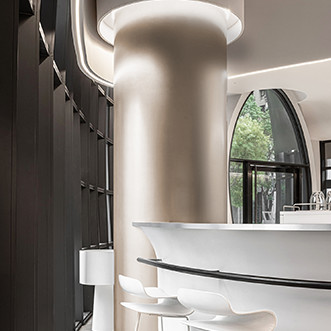
What “Best” Really Means in High-Traffic Commercial Use
The best surface film material is not defined by a single property like thickness or hardness. It is defined by how well the film holds up under a combination of abrasion, impact, repeated cleaning, and visual scrutiny. In high-traffic spaces, surfaces are judged in three ways at the same time.
First is functional durability, meaning the film must resist scuffing, scratching, and edge wear while staying bonded to the substrate. Second is chemical reliability, meaning the film must tolerate routine disinfectants and cleaners without whitening, staining, or losing gloss. Third is long-term appearance stability, meaning color, texture, and reflectance should remain consistent so that replacement panels do not look different from installed panels.
A surface film that performs well in one area but fails in another is rarely suitable for commercial projects. pet film is often selected because it can be balanced across these requirements rather than optimizing one at the expense of others.
Why PET Film Is a Strong Material Choice for Commercial Surface Protection
PET is valued in commercial surface applications because it is dimensionally stable, mechanically strong, and compatible with a wide range of decorative and protective top layers. In practice, this translates into surfaces that remain flat, consistent, and visually stable during manufacturing and in daily use.
Dimensional stability matters because commercial panels and fixtures are produced in large batches, often laminated at scale. A material that shrinks or distorts under heat and pressure can create stress, curling, or uneven bonding. PET film is well suited for lamination processes where consistency is required across wide panels and repeated production runs.
Mechanical balance also matters. High-traffic use is not only abrasion, it is also repeated contact pressure and localized impact. PET film can be engineered to support both surface protection and a stable decorative appearance, helping surfaces look premium while tolerating real operational wear.
For buyers who need consistent supply and predictable performance, PET film also supports repeatable manufacturing outcomes, including stable roll quality, controlled thickness, and reliable surface behavior.
The Performance Criteria That Matter Most in High-Traffic Spaces
A practical selection process focuses on the performance criteria that drive real-world failure. The following factors are commonly used when evaluating surface film material for commercial environments.
Abrasion and scuff resistance
In high-traffic areas, abrasion is constant and often uneven, concentrating around handles, corners, and contact zones. A suitable PET surface film should resist visible scuffing and avoid rapid gloss change in repeated contact areas. Scuff behavior is especially important because surfaces can look worn even if they remain structurally intact.
Scratch resistance and appearance retention
Scratches are judged visually, so resistance is not only about preventing damage but also about minimizing how visible micro-scratches become under lighting. The best commercial films are designed to reduce the appearance of wear so that surfaces maintain a consistent look across time and across multiple units.
Chemical resistance for daily cleaning
Commercial cleaning can include alcohol-based sprays, disinfectants, mild alkaline cleaners, and frequent wiping. Surface films that haze, soften, or stain under these conditions cause ongoing maintenance issues. PET film can be selected and specified to provide strong chemical stability so that surfaces remain clear and consistent after repeated cleaning cycles.
Anti-fingerprint and stain behavior
High-touch zones like reception counters, elevator surrounds, and shared furniture surfaces require films that are easier to keep visually clean. Surface design and top-layer engineering can reduce fingerprint visibility and limit stain absorption, improving appearance stability without increasing cleaning workload.
Edge and corner performance
Edges fail earlier than flat areas due to impact and repeated contact. A commercial-grade film selection must consider how the film behaves during trimming, wrapping, and long-term edge exposure. Good edge performance supports a premium look and reduces early replacement rates.
BIYT’s PET film portfolio is structured to support these commercial concerns with film options intended for stable processing and reliable surface performance. Product selections can be reviewed through PET Film Products.
PET Film Compared With Other Surface Film Material Options
Commercial buyers often consider multiple material categories. The comparison below highlights why PET is frequently chosen for balanced commercial performance.
| Material Type | Typical Strengths | Common Limits in High Traffic | Best Fit Scenarios |
|---|---|---|---|
| PET surface film | Dimensional stability, strong mechanical balance, compatible with decorative layers, repeatable manufacturing | Requires correct grade selection for abrasion and cleaning demands | Panels, fixtures, cabinetry, furniture components, wall systems |
| PVC-based film | Flexibility, easy forming | Greater risk of plasticizer-related changes, surface aging, and cleaner sensitivity depending on formulation | Shorter lifecycle decorative applications |
| Acrylic-based surface layer | Optical clarity, gloss potential | Can show micro-scratches more visibly, performance depends on thickness and coating design | Display-like surfaces needing high clarity |
| PU-based protective layer | Soft-touch potential, good scratch hiding in some designs | Can be more sensitive to certain chemicals, may change feel over time | Touch-focused surfaces, controlled cleaning conditions |
This is why PET is widely used in high-traffic environments where the goal is not only to look good at installation but to remain consistent after heavy use and frequent cleaning.
How to Choose the Right PET Film for Commercial Projects
PET is the material category, but performance is determined by the film grade and surface design. Selection should be made based on the specific project environment.
Define the traffic pattern and contact behavior
A retail counter face sees constant hand contact and frequent wiping, while a wall panel in a corridor sees impact and abrasion from bags and carts. Both are high-traffic, but they require different priorities.Define the cleaning and chemical exposure profile
If daily disinfecting is expected, chemical resistance becomes a primary requirement. It is important to match film performance to real cleaners rather than generic assumptions.Define the appearance requirements under lighting
Commercial spaces use strong, directional lighting that makes defects and gloss differences more visible. A film that looks acceptable in diffuse lighting may show wear quickly under spotlights.Define the substrate and lamination process
A film must be compatible with the substrate surface energy, adhesive system, and lamination window. Stable bonding and consistent appearance depend on process alignment, not material alone.
A Practical Specification Checklist for High-Traffic PET Surface Films
A clear specification improves supply consistency and reduces disputes. The table below outlines a practical set of checkpoints used in commercial sourcing.
| Specification Area | What to Specify | What to Verify on Receipt | Why It Matters |
|---|---|---|---|
| Thickness and tolerance | Nominal thickness and variation limit | Spot checks and web profile sampling | Controls protection level and consistency |
| Surface durability | Abrasion, scuff, scratch expectations | Wear testing aligned to use | Predicts lifecycle appearance |
| Chemical resistance | Cleaner types and exposure cycles | Wipe tests and immersion checks | Prevents haze and staining |
| Gloss and texture | Target reflectance and tactile feel | Visual standard comparison | Controls premium look and consistency |
| Roll quality | Winding tightness, edge condition | Unwind trial and edge inspection | Avoids defects and downtime |
| Adhesion performance | Bond strength requirements | Cross-cut or peel evaluation | Prevents lifting and edge failure |
BIYT supports commercial buyers by providing PET film options suitable for these specification structures, helping projects achieve stable results from sampling through volume supply. Available film types can be explored through PET Film Products.
Common Failure Modes in High-Traffic Spaces and How PET Film Selection Prevents Them
One common issue is rapid gloss change in walk-by zones and touch zones. This happens when the surface is too easily polished by repeated contact. Selecting an appropriate top-layer design and gloss target helps maintain consistent reflectance.
Another frequent issue is haze or whitening after repeated cleaning, especially with alcohol-containing disinfectants. Chemical-stable PET film selections reduce this risk, keeping surfaces clear and visually consistent over time.
Edge lifting and corner wear are also common in commercial furniture and panels. This is often linked to process mismatch, improper edge finishing, or film grade not suited to edge stress. Selecting a PET film designed for stable lamination and controlling trimming and edge protection reduces early failure.
Staining and fingerprint visibility are often treated as minor, but in commercial spaces they drive perceived quality. Films designed for easier cleaning and lower fingerprint visibility help maintain a high-end look with less maintenance effort.
How to Evaluate PET Surface Films Before Final Approval
Commercial projects should validate performance through a controlled evaluation plan rather than relying only on datasheets.
Start with a visual standard sample and confirm appearance under the actual lighting used in the project. Then run abrasion and scratch evaluations focused on contact zones. Perform chemical wipe tests using the real cleaners expected at the site and record appearance change after repeated cycles. Finally, validate edge performance by testing trimmed edges and corners after cleaning and abrasion exposure.
This approach ensures the selected PET film grade matches the real operational environment and reduces the risk of early wear complaints.
Conclusion
For high-traffic commercial spaces, the best surface film material is the one that maintains appearance and performance under constant abrasion, frequent cleaning, and daily contact while remaining stable in manufacturing and supply. PET surface film is widely chosen because it offers a balanced combination of dimensional stability, mechanical strength, chemical reliability, and design flexibility needed for commercial panels and fixtures. With the right grade selection and a clear validation plan, PET films can deliver premium aesthetics that last through demanding service conditions.
To review PET film options suitable for commercial surface applications and match them to your project requirements, visit our PET Film Products.