

Why Can PET Film Replace PVC-Based Films?
Across furniture, interior decoration, industrial laminations, and surface protection, buyers are increasingly evaluating alternatives to PVC-based films. The reason is not a single trend, but a practical shift in how manufacturers manage long-term appearance, process stability, compliance expectations, and overall lifecycle performance. PVC films can deliver flexibility and cost advantages in certain scenarios, yet in many modern applications they introduce avoidable risks such as surface aging, odor concerns, chemical sensitivity, and performance drift linked to formulation choices.
pet film is widely adopted as a replacement because it offers a different performance profile: strong dimensional stability, reliable mechanical balance, clean surface behavior for printing and lamination, and repeatable results in scaled production. When specified correctly, pet film can support premium aesthetics and long service life while reducing common pain points associated with PVC-based films. BIYT supplies PET film options for decorative and functional applications. You can review available selections through our PET Film Products page.
The Real Meaning of “Replace” in Industrial Film Selection
In sourcing conversations, “replacement” does not mean PET and PVC are identical. It means PET can meet or exceed the practical requirements of many PVC film applications while improving consistency and reducing downstream issues. Replacement happens when PET achieves comparable forming and bonding performance, while offering advantages in stability, appearance retention, and compliance alignment.
For many manufacturers, the film is not a standalone material; it is part of a laminated structure that includes adhesives, substrates, coatings, and surface textures. A film that behaves predictably inside this system is easier to qualify, easier to produce repeatedly, and easier to defend in quality audits. PET is often selected because its properties support stable system performance with fewer surprises over time.
Dimensional Stability: A Core Reason PET Is Chosen Over PVC Films
High-volume lamination and surface finishing depend on consistent dimensions. If a film expands, shrinks, or distorts under heat and pressure, it affects registration, edge quality, and bonding reliability. In commercial interiors and decorative panels, small dimensional changes can create visible defects such as curling, tension marks, or uneven gloss.
PET film is known for strong dimensional stability, which supports:
More consistent lamination outcomes across wide panels
Lower risk of curl and warpage during processing
More stable slitting and roll handling behavior
Better repeatability between batches in continuous production
PVC films can vary more in dimensional response depending on formulation and processing conditions, which can complicate process windows when production lines run fast or when environmental conditions fluctuate.
Long-Term Appearance Retention: Keeping Surfaces Looking New
Many replacement decisions are driven by what happens after installation, not during production. In furniture and interior applications, the key complaint is often that the surface changes over time. This can include gloss shift, yellowing, or changes in feel and appearance that make a surface look aged before its expected service life is reached.
PET film can provide stronger long-term appearance stability because its performance is less dependent on plasticizer systems. In many PVC film structures, plasticizers are used to achieve flexibility and forming behavior. Over time, certain plasticizers can contribute to surface drift, odor issues, or changes in physical feel. These risks are not universal to all PVC films, but they are common enough that many buyers prefer PET as a more stable long-term option.
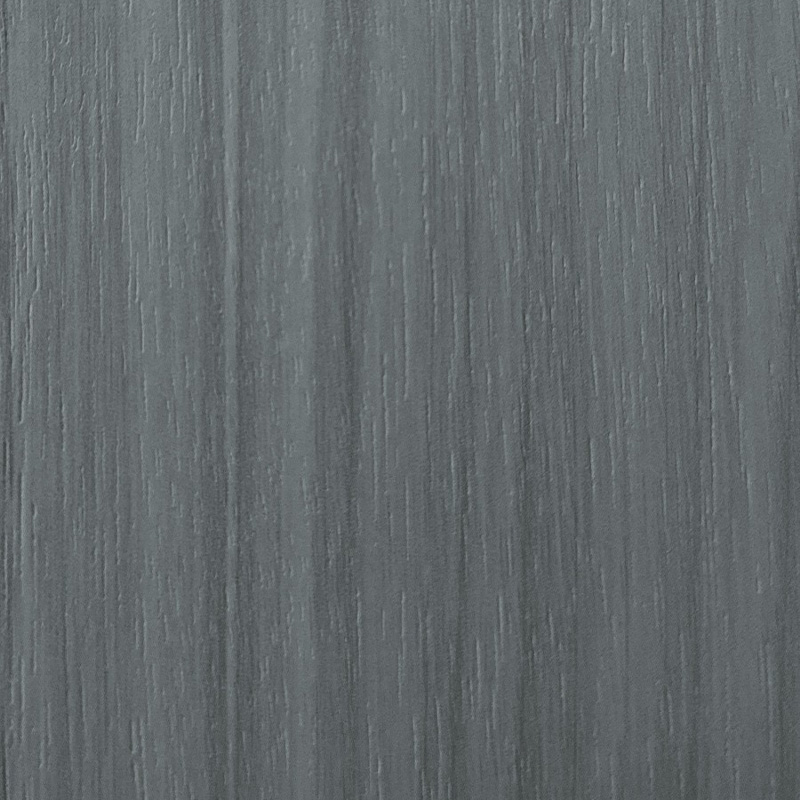
PET also supports high-definition decorative effects, including wood grain and premium textures, while maintaining consistent optical behavior under commercial lighting. This makes PET particularly attractive for projects where surfaces must look consistent across large areas and replacement parts must match original panels.
Odor and Indoor Environment Expectations
For interior spaces, odor perception matters. In hospitality, retail, healthcare, and high-end residential projects, buyers often demand low-odor materials that feel “clean” in enclosed environments. PVC-based films can introduce odor concerns depending on additives and formulation choices, especially when newly installed, warmed by sunlight, or combined with certain adhesives.
PET film is frequently selected for interiors because it supports a low-odor material profile when paired with appropriate adhesives and substrates. This improves user acceptance and reduces complaints after installation. For manufacturers supplying global markets, reducing odor risk also helps simplify project approvals.
Chemical Resistance and Cleaning Reliability
Surface films are exposed to cleaning chemicals, oils, and accidental spills. For many applications, the failure mode is not tearing or delamination; it is haze, staining, or surface whitening after repeated wiping. As cleaning frequency increases in commercial environments, chemical stability becomes more important than initial aesthetics.
PET film can be engineered to deliver reliable chemical resistance for common cleaning routines. This supports:
Better resistance to discoloration from routine cleaners
More stable gloss after repeated wiping
Lower risk of surface tackiness or softening
Cleaner appearance retention in high-touch zones
PVC film chemical behavior can vary widely depending on formulation. Some PVC films perform well, but others may show sensitivity to certain cleaners, especially if the cleaning profile is aggressive or frequent. This variation is one reason buyers standardize toward PET for high-traffic surfaces where cleaning is a constant.
Process Repeatability and Quality Control in Large-Scale Production
Manufacturers prefer materials that are easy to control and easy to repeat. PET film selection often improves process repeatability because it supports stable tension control, predictable lamination behavior, and consistent roll quality. When a film runs smoothly, it reduces downtime and simplifies training across multiple production shifts.
Practical production advantages often include:
More stable unwinding and slitting due to consistent roll formation
Reduced risk of blocking issues during storage and transport
More predictable bonding performance when process parameters are fixed
Better consistency in surface appearance across long production runs
These advantages matter because a film is not judged on a single roll; it is judged on whether it can deliver the same result month after month.
BIYT’s PET film portfolio is structured for repeatable supply and scalable production use. Available options can be reviewed through PET Film Products.
Compliance and Market Expectations: Why PET Often Simplifies Approval
Many global buyers and brand owners evaluate materials through a compliance lens even before performance testing begins. This includes expectations around material composition, environmental alignment, and internal procurement policies. In some sectors, PVC-based materials face additional scrutiny due to how they are perceived in certain markets and how compliance teams manage risk.
PET is often viewed as a simpler choice for cross-market projects because it aligns well with broad procurement expectations and can reduce friction during customer approvals. The practical benefit is smoother qualification, faster project cycles, and fewer redesign discussions driven by material policy rather than engineering needs.
Performance Comparison: PET Film vs PVC-Based Films
The following comparison highlights typical differences buyers consider when deciding whether PET can replace PVC-based films. Actual performance depends on grade selection, additives, surface design, and processing method, so evaluation should be aligned with your application.
| Evaluation Factor | PET Film | PVC-Based Film |
|---|---|---|
| Dimensional stability | Strong stability under heat and pressure, supports repeatable lamination | Can vary with formulation, may require tighter process control |
| Long-term appearance | Consistent look, less risk of drift linked to plasticizer migration | May change over time depending on plasticizer and additive system |
| Odor profile | Often preferred for low-odor interior expectations | Odor sensitivity depends on formulation and installation conditions |
| Chemical cleaning | Can be engineered for reliable cleaning resistance | Performance varies widely; some cleaners may cause haze or change |
| Production repeatability | Stable roll handling and consistent processing behavior | Can be excellent, but depends on formulation and storage conditions |
| Decorative realism | Supports high-definition patterns and controlled gloss and texture | Good decorative range, but stability depends on structure |
This comparison explains why PET is increasingly selected as a replacement in high-end interiors and commercial surface applications where stability and lifecycle appearance are prioritized.
When PET Replacement Makes the Most Sense
PET film replacement is especially effective when the application has one or more of the following conditions:
Frequent cleaning and high-touch contact zones
Large panel areas where appearance uniformity is critical
Projects with strict odor expectations or enclosed interior environments
Long service-life requirements where gloss and color must remain stable
High-volume lamination where dimensional stability affects yield
Global supply where qualification and repeatability reduce risk
In these cases, replacement is not only technical; it is operational. PET helps reduce variability, simplify approvals, and stabilize long-term product experience.
How to Validate PET as a Replacement Material in Your Application
A structured validation process reduces risk and ensures PET delivers the same or better outcomes compared with PVC-based films.
Start by defining success criteria based on failure modes, such as scuffing, gloss change, chemical haze, or edge lifting. Confirm appearance under actual lighting and inspect repeat pattern behavior for decorative films. Run lamination trials using your real adhesive and substrate, then perform cleaning wipe tests using the cleaners expected at the site. For formed components, validate corners and edges, because these zones usually reveal material limitations first.
Finally, lock in a reference sample and define incoming inspection checkpoints such as thickness tolerance, roll quality, and surface appearance. This makes replacement stable over long-term supply rather than a one-time qualification.
Conclusion
PET film can replace PVC-based films in many decorative and functional surface applications because it offers a stronger balance of dimensional stability, long-term appearance retention, chemical reliability, and production repeatability. Replacement decisions are often driven by real operational needs, including stable lamination results, consistent aesthetics across large projects, and fewer risks related to surface aging or formulation variability. When specified correctly and validated under real conditions, PET film delivers durable, premium surfaces that remain consistent through heavy use and frequent cleaning.
To explore PET film options for decorative surfaces, protective laminations, and commercial-grade applications, visit our PET Film Products page.