

Can Solid Color Film Replace Traditional Paint?
Solid color film can replace traditional paint in many surface-finishing scenarios, especially where consistent appearance, cleaner processing, and repeatable production quality matter. Instead of applying liquid coatings and waiting for curing, a Solid Color PET Film provides a ready-finished decorative layer that can be laminated or bonded onto panels and substrates. The result is a uniform color surface with controlled gloss, stable texture, and fewer variables during production.
That said, replacement is not universal. Paint still has advantages in complex shapes, on-site touch-ups, and certain high-temperature or specialized chemical environments. The most practical way to answer the question is to compare performance requirements, production workflow, and lifecycle costs, then decide whether a film-based finish matches your application. This article explains when solid color film is a strong alternative, when paint remains the better choice, and how to specify film correctly for reliable results. Product reference: solid color PET film
I. What Solid Color pet film Is and How It Functions as a Finish Layer
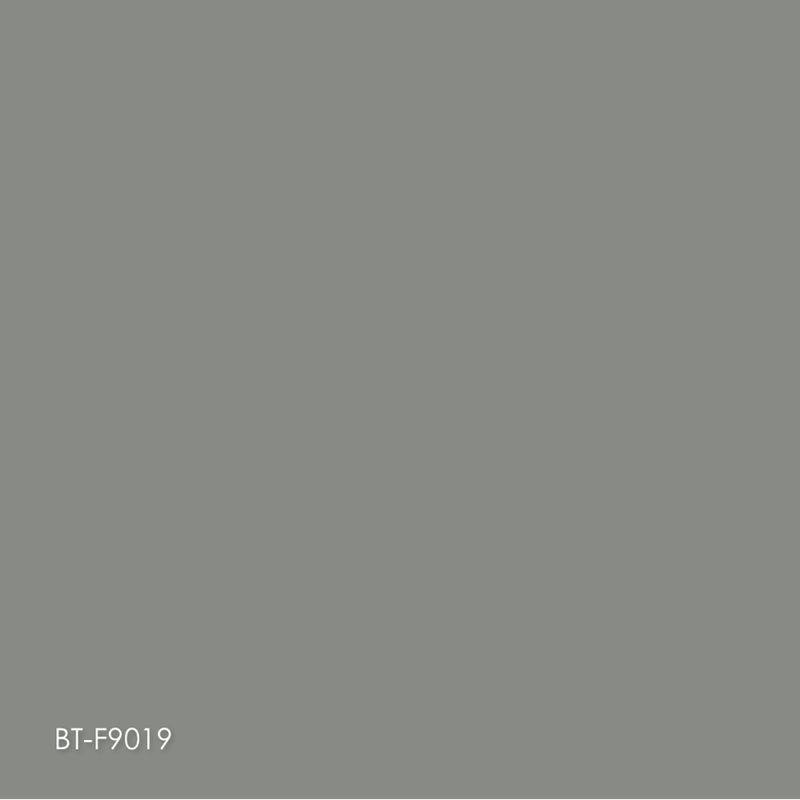
Solid color pet film is a decorative polymer film engineered to deliver a uniform, opaque color surface. It is typically used as a lamination layer on flat or gently formed substrates such as MDF, plywood, particle board, metal panels, composite boards, or other interior panel systems. Because the color and surface are created during film production, the finished appearance is controlled before lamination, which helps reduce the inconsistencies that can occur with spraying, roller coating, or manual painting.
In manufacturing terms, the film acts as a pre-finished skin. Once laminated, it becomes the visible surface that users touch and see. That means the finish quality is determined by both the film properties and the lamination process, including adhesive selection, press parameters, and substrate preparation. When these factors are matched correctly, film finishing can provide a clean, repeatable surface that is well suited to large-scale panel programs.
BIYT focuses on solid color film solutions designed for decorative surface applications and stable color presentation. For available options and application positioning, refer to: solid color PET film
II. Why Many Manufacturers Consider Film as an Alternative to Paint
Paint systems often require multiple steps: surface preparation, primer, coating, drying or curing, and final inspection. Each step introduces variation, especially across different operators, batches, humidity conditions, and curing environments. Even with automated coating lines, paint can still face issues such as orange peel, dust contamination, uneven gloss, color drift between batches, and rework due to defects.
Solid color film is often chosen because it can simplify the finishing workflow. The finish surface is already formed, so the production focus shifts from controlling wet coating behavior to controlling lamination stability. This can reduce VOC concerns associated with many coating operations and can improve factory throughput by shortening or eliminating drying time steps, depending on the process design.
Film finishing also supports standardized appearance. For projects that require consistent color and gloss across multiple panels, multiple factories, or multiple delivery periods, using a controlled film specification can improve repeatability compared with relying on local paint conditions.
III. Performance Comparison: Film vs Paint in Real Applications
The real question is not whether one method is better in general, but which one matches your use conditions. The table below summarizes typical decision factors. Actual performance depends on film grade, paint system, substrate, and manufacturing controls, but the comparison helps structure the evaluation.
| Evaluation area | solid color pet film | Traditional paint |
|---|---|---|
| Appearance consistency | High consistency when film and lamination are controlled | Can vary by batch, operator, environment, and curing |
| Production efficiency | Can reduce finishing steps and avoid drying stages | Often requires multiple coats and curing time |
| On-site touch-up | Limited, usually requires panel replacement or localized repair methods | Easier to touch up small defects |
| Complex shapes and edges | Best for flat or gently formed surfaces, edge detailing needs planning | More flexible for irregular shapes and complex geometries |
| Environmental and process cleanliness | Cleaner finishing zone, less overspray and fewer airborne coating particles | Overspray, odor control, and booth cleanliness are common challenges |
| Long-term maintenance | Stable surface when protected and used correctly | Can chip, scratch, or discolor depending on paint type and exposure |
A useful way to interpret the table is to ask where your defects and costs come from today. If your pain points are color inconsistency, rework, dust contamination, and slow throughput, film often becomes attractive. If your pain points are field repairs and complex geometry finishing, paint may remain necessary.
IV. Where Solid Color Film Replaces Paint Most Successfully
Solid color PET film is most successful in applications that share three traits: large surface area, demand for uniform appearance, and controlled manufacturing conditions. These conditions make film-based finishing predictable and cost-effective.
Common high-fit use cases include decorative interior panels, furniture components, cabinet panels, wall cladding, door skins, and other sheet-based architectural elements. These products typically benefit from consistent gloss and color, and they are often produced in batches where repeatability is a commercial requirement.
Film is also a strong option when you need multiple colors for product lines but want to avoid frequent paint line changeovers. Instead of cleaning spray systems and recalibrating paint viscosity and curing, manufacturers can manage color by selecting and scheduling film rolls, which can reduce downtime in certain production models.
For companies building standardized product programs, film can also support a clearer specification path. Instead of specifying paint brand, coating thickness, and curing profile, you can specify film color, gloss level, surface texture, and lamination method, which makes procurement and quality control easier to standardize across sites.
V. When Paint Still Makes More Sense
Even if film performs well on many panels, paint still has a strong role. Film is not a universal replacement, and treating it as one often leads to poor outcomes.
Paint remains practical when:
The part geometry is highly complex, with deep contours, tight corners, or 3D profiles that are difficult to laminate cleanly
The project requires frequent on-site touch-up after installation
The substrate quality is inconsistent, making lamination riskier than coating
The environment involves specialized exposure, such as extreme heat near certain equipment, where film selection must be carefully validated
The job is small-batch or highly customized, where setting up lamination is less efficient than painting
In these situations, paint is often chosen because it is adaptable. It can be applied locally, repaired more easily, and used across diverse shapes. The trade-off is typically higher process variability and more finishing labor.
VI. Key Specification Factors That Determine Whether Film Can Replace Paint
Many replacement decisions fail because the film is evaluated without matching the full system. A solid color film is only one layer in the finished assembly. To achieve reliable performance, the specification should include the film, the substrate, the adhesive, and the press or lamination method.
Important specification dimensions include:
1、Color and gloss target
A consistent color surface is one of the main reasons to adopt film. Define color standard, allowable deviation, and gloss level. If your product line must match across production periods, plan how color control will be verified.
2、Surface texture and tactile feel
Many buyers now evaluate surfaces by touch, not only by look. Texture selection affects fingerprint visibility, scratch hiding, and perceived quality.
3、Adhesive compatibility and bonding strength
Adhesive choice should match the substrate and the intended environment. A mismatch can lead to edge lifting, bubbling, or localized delamination under heat and humidity cycling.
4、Substrate flatness and cleanliness requirements
Film finishing tends to reveal substrate defects more clearly than paint in some cases. Substrate flatness, dust control, and surface preparation standards should be defined for stable results.
5、Edge strategy and machining plan
Flat panels still need edge finishing. Decide whether edges are wrapped, banded, or handled by profiles. This decision often determines whether film becomes a full replacement or only a face-surface solution.
BIYT supports solid color PET film options intended for decorative finishing and production-oriented use, helping manufacturers align color consistency and surface control with stable supply.
Conclusion
Solid color PET film can replace traditional paint in many panel-based finishing applications, particularly where appearance consistency, production repeatability, and cleaner workflow are priorities. It is most effective on flat or gently formed surfaces produced under controlled manufacturing conditions, where lamination can be standardized and quality can be verified at scale. Paint remains a strong option for complex geometries, on-site repair needs, and highly variable job conditions.
If your goal is a uniform, repeatable decorative finish with controlled color and gloss options, explore BIYT solutions here: solid color PET film